
Media
Connector Insights
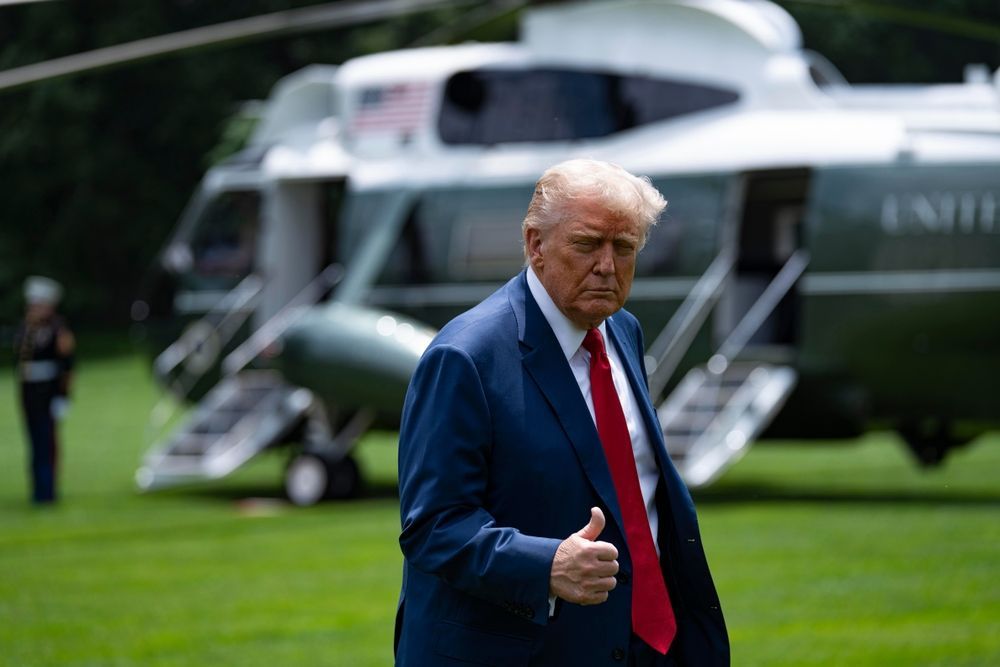
The Trump administration is acquiring stakes in strategically important U.S. companies at an unprecedented speed and scale, deploying over $10 billion of taxpayer funds in just the past six months. From steel and semiconductors to rare earth minerals and nuclear energy, at least nine companies have seen Washington step in as a shareholder. The White House portrays these moves as bolstering national security and supply chain resilience, but they raise a pivotal question: Is this bold intervention a smart investment in America’s future, or a risky gamble that could leave taxpayers holding the bag? An Unprecedented Wave of Federal Investment Never before has the U.S. government so proactively taken equity in private firms outside of a financial crisis. Consider some of the headline deals announced in 2025: U.S. Steel (Steel Industry): In June, the Administration obtained a special “golden share” in U.S. Steel – a non-financial stake granting veto power over certain decisions – as a condition for approving the company’s sale to Japan’s Nippon Steel. This ensured U.S. Steel’s new foreign ownership can’t undermine American interests. MP Materials (Rare Earths): In July, the Department of War (DoW) invested $400 million to acquire a significant stake in MP Materials, a rare-earth mining company, becoming its largest shareholder. The deal will fund a new U.S. magnet factory and includes a 10-year agreement to purchase all its magnets, with DoW even guaranteeing a floor price for critical rare-earth oxides. It’s an aggressive bid to break China’s stranglehold on rare earths. Intel (Semiconductors): By August, the Commerce Department had converted a portion of Intel’s federal chip subsidies into an equity stake of about 9.9% in the company. This $8.9 billion stake instantly made the U.S. government Intel’s largest single shareholder. Westinghouse (Nuclear Energy): In October, the Commerce Department secured an option to take an 8% ownership in Westinghouse, a major nuclear power firm, as part of a plan to jump-start construction of new reactors. If Westinghouse’s value climbs to the $30 billion range and it goes public, the government can exercise rights to purchase up to 20% of the company. This gives Washington influence in a sector deemed vital for both energy security and national defense. Several other deals in late 2025 followed a similar pattern: Lithium Americas, a Nevada lithium mining venture, received deferred federal loans in exchange for a 5% government stake in the company (plus 5% in its Thacker Pass mine joint venture). The Pentagon took a 10% stake in Trilogy Metals, which has mining projects in Alaska. And in November, startups Vulcan Elements (a rare-earth magnet manufacturer) and ReElement Technologies (a critical minerals processor) secured federal funding with strings attached – equity warrants and future stock purchase rights for the government. In total, Washington’s equity investments now span industries that form the backbone of the modern economy. Aims: Security and Supply Chain Autonomy What’s driving this flurry of Uncle Sam’s stock buying? In a word, security – both national and economic. Administration officials argue that these targeted investments will strengthen supply chain autonomy and reduce U.S. reliance on foreign powers for critical goods. A White House spokesperson defended the strategy, saying if “business-as-usual” policies had worked, “America would not be reliant on foreign countries for critical minerals, semiconductors and other products that are key for our national and economic security.” The message is clear: by taking ownership stakes, the government hopes to jump-start domestic capacity in areas where America has fallen behind, from chip fabrication to mineral refining. The geopolitical context looms large. China’s dominance in rare earths, batteries, and solar panels – and its willingness to use that leverage – has shaken U.S. policymakers. In fact, earlier this year President Trump invoked emergency powers under the Defense Production Act to boost domestic mining of critical minerals. The Pentagon’s deal with MP Materials, for example, is explicitly meant to “keep China from accessing even more rare-earth metals.” Likewise, the stake in Intel comes as global semiconductor supply chains are being re-shored to prevent the kind of chip shortages that hampered industries in recent years. In short, these investments are seen as strategic bets to secure American control over key resources and technologies. There’s also an economic argument: supporters claim that by investing directly, the government can shape industries in the public interest and share in their success. Rather than give outright grants or subsidies, they take equity so that “taxpayers get a good bargain” if the company thrives. The hope is that public money can “move the ball forward” in high-risk areas where private capital was skittish, and then crowd-in more private investment. In theory, this proactive approach could bolster U.S. manufacturing jobs and innovation, reinforcing long-term economic security alongside national security. Unusual Methods: What Gives the Government Authority? How is the Administration pulling this off, legally speaking? After all, the U.S. government doesn’t typically play venture capitalist. The answer is a patchwork of authorities and creative maneuvers crafted both by the Trump team and building on tools Congress created in prior years. For one, the Administration is leveraging the Defense Production Act (DPA) – a Cold War-era law that allows the government to direct industrial production for national defense. Trump’s March 2025 emergency order on critical minerals opened the door for the Pentagon to pour money into mines and processing facilities. The MP Materials deal, for instance, is funded in part through DPA Title III appropriations. This essentially treats secure access to rare earths as akin to a wartime priority, which in today’s strategic climate isn’t far-fetched. Newer institutions are in play as well. The Department of Defense’s Office of Strategic Capital, launched in 2022, received a funding boost to invest in critical industries like minerals, shipbuilding, and microelectronics. This office acts almost like an investment fund within the Pentagon. Similarly, the Commerce Department is tapping the CHIPS Act – a $52 billion semiconductor subsidy program enacted in 2022 – and converting some of those grants into equity stakes. The 9.9% Intel stake emerged from this approach: roughly $5.7 billion of remaining CHIPS Act grants, plus $3.2 billion from a Defense “Secure Enclave” program, were converted into common stock shares of Intel. It’s an unprecedented use of federal incentive funds. Other agencies have joined in: the Department of Energy’s Loan Programs Office, originally geared to give loans for clean energy, has negotiated for warrants or equity options in exchange for helping firms like Lithium Americas. Even regulatory powers have been leveraged – the U.S. Steel “golden share” came about because the Administration could approve or block the foreign takeover, effectively using that as bargaining power to secure a stake without spending a dime. In short, the government is activating every lever it can: emergency powers, dedicated funds, loans, and deal-making clout – all to insert itself into the boardrooms of private industry. Concerns: Risks, Transparency, and Precedents This wave of proactive government intervention is not without significant controversy. Critics from across the spectrum are asking pointed questions about how these investments are being decided and what risks they carry. First is the issue of strategy and transparency. Thus far, there is “no clearly articulated strategy” tying these deals together, observes Aaron Bartnick, a Columbia University fellow and former Biden administration official. It appears ad hoc – a deal here, a deal there – reactive to opportunities or crises rather than part of a cohesive industrial policy. The selection process for which companies get federal money has also been opaque. Are these truly the most critical and deserving firms, or just those with the right connections and lobbying? Darrell West of Brookings noted that many deals had “almost no serious review” and “don’t seem well thought out.” The fear is that, absent transparent criteria, political considerations (or even personal interests) could creep in. When huge sums are at play, the potential for “deals that favor friends or disfavor foes” is a real concern. Indeed, conflicts of interest are a looming worry. The STOCK Act prohibits officials from insider trading, but it doesn’t prevent them from owning stocks they also influence. After all, if Uncle Sam becomes a major market player, will public officials be tempted to talk up or bail out the firms in which the government (and they themselves) have a stake? It’s a slippery slope that has some economists uneasy about the long-term implications for fair markets. Then there’s the fundamental question of financial risk. These companies were not picked at random – several were in distress or carrying heavy debt. Westinghouse, for example, only a few years ago went bankrupt due to cost overruns on nuclear reactors, and it remains under financial pressure. MP Materials is attempting to build an entire supply chain from mine to magnet essentially from scratch, in an arena where China has undercut prices for years. Even Intel, while not distressed, is pouring capital into turnaround efforts as it fights off fierce overseas competition. In many cases, Uncle Sam is effectively backing underdogs in very tough industries. If these bets fail, taxpayers could lose billions. Unlike a venture capitalist, the government can’t easily diversify away the risk – it’s concentrating public funds in a handful of companies. And unlike the bank bailouts of 2008, these are not (yet) systemically critical firms that absolutely must be saved; they are strategic choices with uncertain outcomes. Will the public be willing to absorb a loss if, say, a mining venture goes bust or a high-tech company doesn’t pan out? Lastly, observers worry about the long-term precedent. America has historically championed free markets and limited government involvement in business. This new “proactive capital intervention” reflects a sense of urgency about keeping up in the global industrial race (particularly vis-à-vis China). But it also marks a step toward a more state-directed economy. Today it’s rare earths and chips; tomorrow could a future Administration use this playbook for other sectors, potentially distorting markets or playing favorites? Once the government is in the habit of buying stakes in companies, it may prove difficult to draw the line. Even supporters of the strategy acknowledge these moves are experiments whose broader effectiveness and cost to the public “remain to be seen.” Does It Help the Economy – and What About Inflation? Beyond security concerns, there’s debate over the economic effects of these investments. Do they actually benefit the U.S. economy? Potentially, yes: by catalyzing new domestic industries, they could create jobs and technological leadership in fields like advanced manufacturing, battery production, and nuclear engineering. If successful, the return on investmentmight include not just profit for the Treasury, but a larger tax base and reduced supply chain disruptions for American manufacturers in the future. However, skeptics note that government-picked winners don’t have a great track record. Will these companies become self-sustaining engines of growth, or perpetual wards of the state? That likely depends on execution. One positive sign is that some of the companies’ stock prices have surged with the news – investors seem cheered that the federal government is providing a backstop. But Wall Street’s short-term enthusiasm is not proof of long-term success (and in fact could signal market distortions, since who wants to bet against a firm backed by essentially unlimited government resources?). A related concern is inflation – pouring billions into companies could, in theory, stimulate parts of the economy and add to inflationary pressure. In practice, though, these sums (around $10 billion total so far) are tiny relative to the $25 trillion U.S. economy and the trillions in federal spending during the pandemic. They’re targeted investments, not broad stimulus. If anything, by addressing supply bottlenecks (e.g. helping produce more semiconductors domestically), these actions might reduce inflationary pressures over the long run in those specific markets. For example, more chip fabs in America could eventually mean cheaper, more stable supply of electronics, cars, and appliances for consumers. Still, any new government spending when the economy is running hot has to be watched. The key is that these investments should increase productive capacity – otherwise it’s just money sloshing around. In short, the jury is out on the macroeconomic impact; it likely hinges on whether these companies thrive. If they do, the economy gains productive assets and high-paying jobs (a plus). If they don’t, we’ve effectively thrown money into a hole (a loss, potentially slightly inflationary with nothing to show for it). Balancing Bold Action with Accountability This great experiment in government-as-investor underscores a broader shift in thinking. Faced with global industrial competition, the U.S. is edging away from a pure free-market ethos toward a more protective, strategic stance. It’s a recognition that, in an era of Chinese state capitalism and fragile supply chains, doing nothing may carry greater risks than doing something. In many ways, these equity stakes amount to catching up on industrial policy that rival nations have been practicing for years. Yet even those sympathetic to the goals argue that more discipline and oversight are needed. If America is going to remake its approach, it must do so carefully. What might that entail? Based on the facts at hand, here are a few logical steps and policy recommendations: Develop a Coherent Long-Term Strategy: Rather than a series of one-off rescue missions, the Administration should articulate a national industrial strategy that prioritizes which capabilities we build domestically, in what time frame, and with what mix of tools (regulations, R&D, education, as well as investment). This plan should involve input from industry, labor, and security experts, so that investments are made in a coordinated fashion. A broader strategy could also ensure we support a diverse ecosystem of companies (big and small) to avoid creating single points of failure. Improve Transparency and Oversight: The government should be upfront about the criteria for selecting companies and the terms of deals. Clear benchmarks and conditions should be attached to each investment (e.g. performance milestones, matching private investment, limits on executive bonuses or stock buybacks until taxpayers are repaid). An empowered oversight board or inspector general should track these projects to make sure public funds are used for their intended purpose – supply chain resilience, not corporate welfare. This will help counter perceptions of favoritism and ensure conflicts of interest are avoided. Publishing periodic reports on the outcomes (jobs created, output achieved, revenues earned) will also help maintain public support. Protect the Taxpayer’s Interests: Whenever possible, structure the support as loans, convertible equity, or warrants so that taxpayers gain if the company gains. The Intel case, for example, might turn out well if Intel’s stock rises in the future and the government can sell its stake at a profit. Likewise, the Pentagon taking warrants in Vulcan and ReElement means if those startups succeed, the government can share in upside. Such arrangements are far preferable to straight grants or handouts. Additionally, set clear “exit” plans: the government shouldn’t plan to own pieces of companies forever. Once strategic projects are up and running, there should be a roadmap to either privatize the government’s stake or gradually withdraw support, to let market competition take over under normal conditions. Leverage Allies and Private Capital: The U.S. doesn’t have to shoulder the burden alone. For instance, on critical minerals and semiconductors, allies like Japan, Europe, and Australia are also investing in diversifying supply chains. Coordinating strategies can avoid duplication and share costs. If the U.S. is funding a rare earth facility, perhaps allies can focus on related processing or a different material. Private investment should be co-invested whenever feasible, as seen with the Vulcan project that raised $550 million privately alongside government loans. The more skin in the game private investors have, the more confident we can be that a project is economically sound. Public funds should aim to catalyze private innovation, not replace it. Focus on Innovation and Competitiveness: The end goal should be that these industries become globally competitive without indefinite subsidies. That means continuing to invest in R&D (through NSF, DARPA, ARPA-E, etc.) so that American firms lead technologically. Workforce development is also key – training the engineers, chemists, and skilled trade workers needed for these new factories. Policies like tax incentives for manufacturing, streamlined permitting for plants, and reliable infrastructure (energy, transport) will support the success of the very projects the government is funding. In short, money alone won’t solve the problem – it must be accompanied by smart policies that improve the overall environment for high-tech manufacturing in the U.S. In conclusion, the Trump administration’s aggressive investment strategy reflects a seismic shift: economic security is now viewed as national security. By treating industrial capacity and supply chains as strategic assets, the U.S. government is wagering billions in public funds to reclaim domestic strength and reduce foreign dependence. The rationale is compelling—but so are the risks. This high-stakes experiment will ultimately be judged by outcomes. The Administration has placed its bet. Now it must show the country not just the vision—but the plan—to make it pay off. America’s industrial revival cannot be built on government cash alone; it will require careful planning, accountable execution, and partnership with the private sector. Getting that balance right is the next big challenge. The stakes, both figuratively and literally, could not be higher. Because when Uncle Sam takes a seat in the boardroom, every American becomes a shareholder in the results. Rick Westerdale has more than 30 years of experience across the federal government as well as in the global energy industry. As a Vice President at Connector, Inc., a boutique government relations and political affairs firm based in Washington, D.C., Rick advises clients on strategy, investment, and policy across healthcare, hydrocarbons, LNG, hydrogen, nuclear, and the broader energy transition.

The political tension in Venezuela is climbing again, and this time the world is watching with a level of attention that President Nicolás Maduro has not faced in years. The United States has intensified its anti-drug and anti-trafficking operations throughout the Caribbean, and the most recent development, the seizure of a Venezuelan-linked oil supertanker, has vaulted the new page of the conflict into a very public spotlight. The U.S. Coast Guard boarded and seized the tanker off the coast of Venezuela under a federal warrant tied to sanctions violations and illicit oil trade. The ship was loaded with nearly two million barrels of crude oil. The seizure was executed legally and decisively, and it caught the Maduro government completely off guard. This move is not isolated. It is part of the Trump administration’s broader effort to dismantle the financial systems that keep Maduro afloat, illegal drug trade and illegal oil alike. These networks often intersect with drug trafficking groups, sanctioned foreign militaries, and illicit oil trading webs that funnel money into Venezuela’s ruling elite. By targeting the routes that keep these networks alive, Washington is applying pressure in the one place where authoritarian regimes tend to feel it most. Their coffers. Maduro’s response was predictable, but it revealed a major weakness rather than strength. He called the seizure an act of piracy and theft, accusing the United States of violating Venezuela’s sovereignty. He delivered the statement with a level of anger that suggests how deeply this operation was successful and struck at his inner circle. When a leader relies so heavily on underground trade to keep his government running, a public and high-profile seizure of this magnitude threatens more than revenue. It threatens his credibility with the very entities, elites, and military brass he depends on. President Trump has made it clear that the United States will keep escalating pressure until Maduro either steps aside or loses the financial capability to maintain his regime. The message is simple. If you engage in illegal trade with Caracas, expect to get your ship and your cargo seized, and your future access to global markets shuttered. Nations that have looked the other way in the past are now reconsidering the risk. Tanker operators, middlemen, and foreign governments that once treated Venezuelan trade as a quiet opportunity are starting to ask whether it is worth the attention of American courts and the U.S. Coast Guard. The seizure of the tanker is a turning point because it signals that maritime operations are no longer just focused on active drug operations, and are clearly not saber rattling. They are active, public, and increasingly effective. No closed-door sanctions meeting sends a message as strongly as a full oil tanker being escorted away under U.S. authority. Venezuela is losing the ability to hide what it exports, how it exports it, and who enables the flow. This moment represents a shift in the conflict. Maduro is cornered financially. His allies are now watching their own exposure. His government is scrambling to craft a narrative that no one outside of Caracas believes. Meanwhile the United States is growing more confident in operations that target the regime’s economic lifelines. If this pattern continues Maduro will face a choice that becomes narrower each day. Either step down and leave the country voluntarily or wait for the internal and external pressures to collapse what remains of his rule. President Trump’s strategy is producing visible effects that even his critics cannot ignore. Illegal trade is becoming more expensive. The costs of supporting Maduro are rising. The international community is watching a leader lose leverage in real time. With every interdiction, every drug boat hit, and every tightened sanction the message is reinforced. The United States is serious about dismantling the networks that fund corruption, drug trafficking, and authoritarianism in Venezuela. The pressure is only increasing; and it is clear, Maduro knows it. Ryan Parada is a Partner and the Chief Government Affairs Officer for Connector, Inc. where he oversees both domestic and international portfolios. He is a policy expert for our clients in numerous areas, including national security, energy, and the tobacco industry.

College football realignment has never been about tradition, heritage, or “student-athlete welfare.” It has been about what it has always been about: money. Lots of it. Tower-of-cash, Scrooge-McDuck, Olympic-size-swimming-pool-of-TV-revenue money. And nobody pretends otherwise. When USC and UCLA bolted the Pac-12 for the Big Ten, every commentator in America shrugged and said, “Smart move.” More money, more exposure, more national games. Sensible. Strategic. Zero blame. When Texas and Oklahoma packed up the moving van and headed to the SEC, the reaction was the same: “Smart move.” Get the bag. Secure the future. Maximize brand value. Good business. But when Notre Dame — which has more athletic revenue and brand equity than any program in the nation not named Alabama or Ohio State — chooses not to join a conference, suddenly the chorus changes. Now it’s: “Join a conference!”“They don’t deserve a playoff shot!”“This is what they get!” Let’s be honest: those arguments are just peanut butter and jealous. Notre Dame has the TV contract everyone else wishes they had. NBC didn’t leave them. The fans didn’t leave them. The ratings didn’t leave them. They didn’t realign because they didn’t have to. The program didn’t implode, the stadium didn’t empty, and the brand didn’t shrink. If anything, independence preserved what made Notre Dame valuable in the first place. If other teams could pull off independence financially, they would. They can’t. So they join conferences and split TV money ten or twelve ways. Notre Dame doesn’t. If that makes people salty, that’s a them problem. About that bowl game . . . Skipping an exhibition bowl — and that’s what these are now — was not only sensible, it was borderline enlightened. Players get time to heal instead of spending Christmas week getting concussed for a bowl named after a regional HVAC distributor. Coaches can recruit instead of preparing for a game nobody remembers 48 hours later. Staff can see their families. And boosters don’t have to fly to a city they only pretend to like because ESPN said it mattered. Everyone wins. Except the “THIS IS AN OUTRAGE!!!” crowd on social media, who apparently believe 19-year-olds owe them a postseason performance in perpetuity.Tulane and James Madison? Let’s be serious. Tulane is a fine institution. James Madison is a fine institution. Their fans should be proud. But nobody, and I mean nobody who is not already three drinks deep into a glass of Notre Dame haterade, believes these teams field better football programs than Notre Dame. If the goal of the College Football Playoff is to select the best teams in America, then anyone arguing Tulane and JMU belong ahead of Notre Dame needs to turn in their voter card and pick up a foam finger from the bargain bin. The CFP isn’t driven by money? Fascinating. On the bright side, the CFP selection committee has finally demonstrated that their decisions are not driven exclusively by financial incentives. Because if money were the driving force, Notre Dame — with its national ratings, enormous alumni base, and unmatched brand power — would be treated like a golden lottery ticket, not a scheduling inconvenience. Instead, Notre Dame got squeezed out while realignment refugees with shiny new conference affiliations got rewarded. Fascinating indeed. Frag out. Notre Dame didn’t get punished for scheduling, for results, or for talent. They got punished for being independent — the same independence that makes the program valuable, marketable, and stable. If Texas, Oklahoma, USC, and UCLA can make business decisions without being labeled unworthy, so can Notre Dame. And if the selection committee wants credibility, maybe don’t pretend Tulane and JMU are suddenly titans of the sport. Until then? Frag out. Chris Faulkner, a United States Marine Corps veteran (1991–2001), serves as a Senior Advisor at Connector, Inc. where he leans on nearly three decades of winning campaigns to advise our clients on their political efforts and goals. He and his wife, Angela, live outside Knoxville, Tennessee with their poodle and pit bull, and are proud parents of three adult sons.

When President Donald J. Trump returned to the Oval Office in January of 2025, the world was no longer confronting or encountering a United States adrift – it was engaging with a United States that was reasserting itself after four years of strategic confusion, ideological vanity, and avoidable decline. The Biden-Harris administration had left behind a global landscape defined by weakness masquerading as diplomacy: a proxy war in Eastern Europe with no defined objective, emboldened terrorist networks across Africa and the Middle East, transnational criminal organizations operating with near impunity, and adversaries who had learned correctly that American retaliation was uncertain, delayed, weak, or entirely absent. President Donald J. Trump’s return did not merely signal a change in tone . . . it marked the restoration of a governing philosophy that had been tested during his first term and refined during his political discontinuity. Within weeks, it became clear that the President was not simply improvising foreign policy. He was executing a new doctrine – a doctrine grounded in realism, sovereignty, deterrence, and a belief that peace is preserved not through accommodation, but through strength that is credible, visible, and decisive. The Trump Doctrine operates with one core principle from which everything filters through and from: America will have peace through unyielding strength. The United States has seen many doctrines established, thrive, and fizzle throughout our 250-year history. Some of them we all know well (the Monroe Doctrine) and some are more obscure (The Roosevelt Corollary). However, the America we find ourselves in today requires a new heading and approach to the world stage we see before us. It no longer makes sense for us to maintain the post-Cold War consensus that America only exists to manage the world’s problems rather than defending its own interests. For decades, policymakers in both parties – but especially Democrats – embraced a foreign policy that treated American power as a resource to be rationed among international institutions, global initiatives, and perpetual stabilization efforts abroad. The result was predictable: endless deployments, endless spending, and diminishing returns for the American people. It isn’t a surprise then when the leader of the America First / Make America Great Again movement rejects that framework entirely. Strategic sovereignty – the idea that the United States alone determines when, where, and how it deploys its power – is the Trump Doctrine’s first spoke off of that hub principle of peace through unyielding strength. This does not mean retreating from the world or cowering in fear of threats to our homeland. It means restoring and reordering priorities. Under the Trump Doctrine, American engagement abroad is justified only when it advances clearly articulated U.S. interests: the safety of American citizens, the integrity of U.S. borders, the security of the homeland, and the preservation of the American economy and American military dominance. This distinction matters. Where previous administrations sought legitimacy from multilateral consensus, President Trump seeks results. Where Democrats confuse moral posturing with leadership, President Trump insists on outcomes. And where Joe Biden viewed American power as something to apologize for or restrain, President Trump views it as the indispensable stabilizing force in a dangerous and unpredictable world. The phrase “peace through strength” is often invoked but rarely understood. The core concept originated with the Romans in the late 4th century with their doctrine: Si vis pacem, para bellum – If you want peace, prepare for war. The concept continued to mature and evolve as Europe did ultimately becoming conventional wisdom in realist international relationships. Machiavelli argued that weak states invited aggression towards them while Hobbesian Realism treated power as the ultimate guarantor of order. When the concept of “peace through strength” reached America, we saw it appear strategically in President George Washington’s emphasis on preparedness and Alexander Hamilton’s Federalist arguments for a standing military. But it is Senator Barry Goldwater who introduced the phrase into our common political vernacular during his 1964 presidential campaign when he used the phrase to campaign on the need for military superiority over the Soviet Union and the rejection of unilateral disarmament. Then, President Ronald Reagan institutionalized the concept and the phrase in conservative politics using it to justify building up our national defenses, nuclear deterrence, and his strategic defensive initiatives. Under the Trump Doctrine, it is neither a slogan, an applause line, nor a nostalgic nod to President Reagan. It is an operational philosophy. Peace is not maintained by signaling restraint. It is maintained by convincing adversaries that escalation will be met with overwhelming and immediate consequences. During the Biden years, adversaries tested American resolve precisely because they doubted it existed. Iranian proxies attacked United States assets, terrorist organizations rebuilt networks, and cartels expanded operations. Each test was met with delay, handwringing, or symbolic responses – reinforcing the perception that American power had lost its edge. President Donald J. Trump’s second term has corrected that perception quickly. From the outset, the administration made clear that American red lines would be enforced – not negotiated, not studied, not deferred. This does not mean indiscriminate use of force. On the contrary, the Trump Doctrine rejects blunt, large-scale military occupation as a default tool. Instead, it embraces decisive, disproportionate response when deterrence fails. Strength, under this doctrine, is not measured by the duration of deployments or the number of bases maintained abroad. It is measured by whether adversaries alter their behavior. And increasingly, they have. Perhaps the most misunderstood element of the Trump Doctrine is its approach to military force. Critics reflexively accuse President Donald J. Trump of recklessness, yet the doctrine itself is built on restraint – not in the sense of hesitation, but in the sense of discipline. The Trump Doctrine categorically rejects nation-building as a strategic objective. The United States does not exist to remake foreign societies, referee civil conflicts, or subsidize governments incapable of securing their own territory. These fantasies consumed trillions of dollars and thousands of lives over two decades, and they produced neither stability nor gratitude. Instead, President Trump has reoriented the military toward precision deterrence: targeted, lethal force designed to eliminate specific threats, disrupt operational capacity, and restore deterrence – without permanent occupation. This approach has been evident in renewed counterterrorism operations against jihadist networks in Africa, where United States strikes have focused on leadership decapitation, logistical disruption, and intelligence-driven targeting rather than troop-heavy presence. It has also shaped the administration’s reframing of transnational criminal organizations – particularly drug cartels – as national security threats rather than mere law enforcement problems. Under the Trump Doctrine, threats are addressed at their source. Sovereignty is not an excuse for inaction when hostile actors operate with state tolerance or complicity. This marks a fundamental shift from the risk-averse posture of the Biden era and signals to adversaries that geographic distance no longer provides insulation from consequence. Doctrines matter only when they are institutionalized. The Trump Doctrine is not rhetorical or theoretical . . . it is embedded in policy. The 2025 National Security Strategy (NSS) formalizes the administration’s approach by explicitly prioritizing threat elimination over conflict management, deterrence over de-escalation theater, and strategic repositioning over inertia. The document acknowledges what Washington, D.C. has long refused to admit: that America’s military footprint must evolve to meet modern threats, not remain frozen by legacy commitments and outdated assumptions. The NSS emphasizes flexibility, speed, and clarity of mission. It authorizes force when necessary, withdraws it when objectives are met, and refuses to sustain deployments solely to avoid criticism from the foreign policy establishment. It also introduces a broader conceptual shift – recognizing that threats to American security are no longer confined to traditional battlefields but include non-state actors, criminal networks, and asymmetric challengers willing to exploit American hesitation. This strategy does not seek endless confrontation. It seeks predictability – the kind that deters adversaries because they know precisely what will happen if they cross the line in the sand America has drawn. To understand the Trump Doctrine, we must first confront the vacuum it replaced. Under Joe Biden’s autopen, American foreign policy lacked hierarchy. Every crisis was treated as equally urgent – and therefore none were resolved. Ukraine received unlimited funding without a strategy for victory or peace. Terrorist threats were “managed” rather than eliminated. Adversaries learned that escalation carried little risk, while our allies learned that American leadership was inconsistent, ineffective, and conditional on domestic political optics. President Donald J. Trump and his doctrine restored hierarchy. Not every conflict matters equally nor deserves our full attention. Not every ally warrants unconditional and unlimited support. And not every threat requires the same response. By distinguishing between core interests and peripheral concerns, the Trump Doctrine reintroduces strategic discipline into American statecraft. The author Tom Clancy might have unknowingly best summarized the Trump Doctrine nearly twenty years ago in his novel Executive Orders. Towards the end of that book, his character, President Jack Ryan, is speaking to the world after a military battle between the United States of America and the fictional country United Islamic Republic when he says: “Finally, and I say this to all nations who may wish us ill, the United States of America will not tolerate attacks on our country, our possessions, or our citizens. From this day forward, whoever executes or orders such an attack, no matter who you are, no matter where you might hide, no matter how long it may take, we will come for you. . . . To those who wish to be our friends, you will find no more faithful friend than we. To those who would be our enemies, remember that we can be faithful at that, too.” – Tom Clancy’s President Jack Ryan This is not cruelty. It is realism. And realism, not sentimentality, is what prevents war. Peace through unyielding strength establishes the foundation – not the full architecture – of the Trump Doctrine. It defines the principles that guide this foreign policy realignment and guide America’s actions: sovereignty, deterrence, precision, and unapologetic strength. It explains why the United States must act decisively when threatened and why endless restraint invites chaos rather than peace. There is more to the Trump Doctrine though. It extends into economic statecraft, alliance management, and hemispheric strategy. But none of that works without the core premise established here: America must once again be feared by its enemies and respected by its allies – not pitied by both. Ultimately, the Trump Doctrine restores that balance and in doing so, it restores the conditions for peace. Rob Burgess is a national Republican strategist, and Chief Executive Officer at Connector, Inc. – a boutique government relations and political affairs firm with offices in Washington, D.C.

How the Federal Trade Commission Can Finally Tame Big Pharma

If we truly want to be America First, it is imperative that we're American Energy First as well.

We find ourselves in a global race with diverging playbooks.

The city that never sleeps just hit the snooze button — hard.
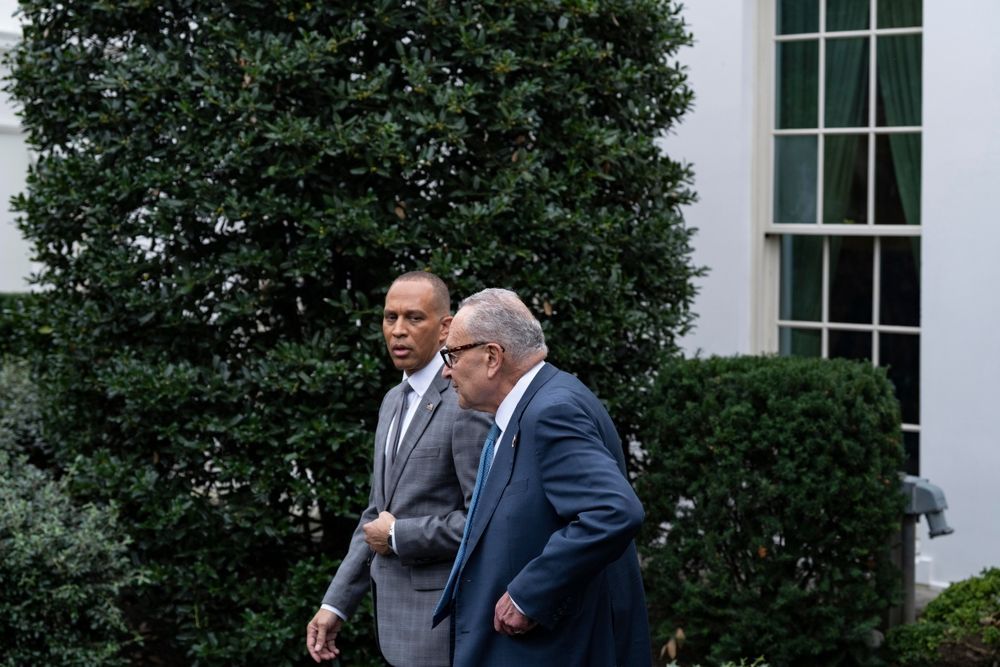
Their outrage was scripted from the start and the American people deserved better.
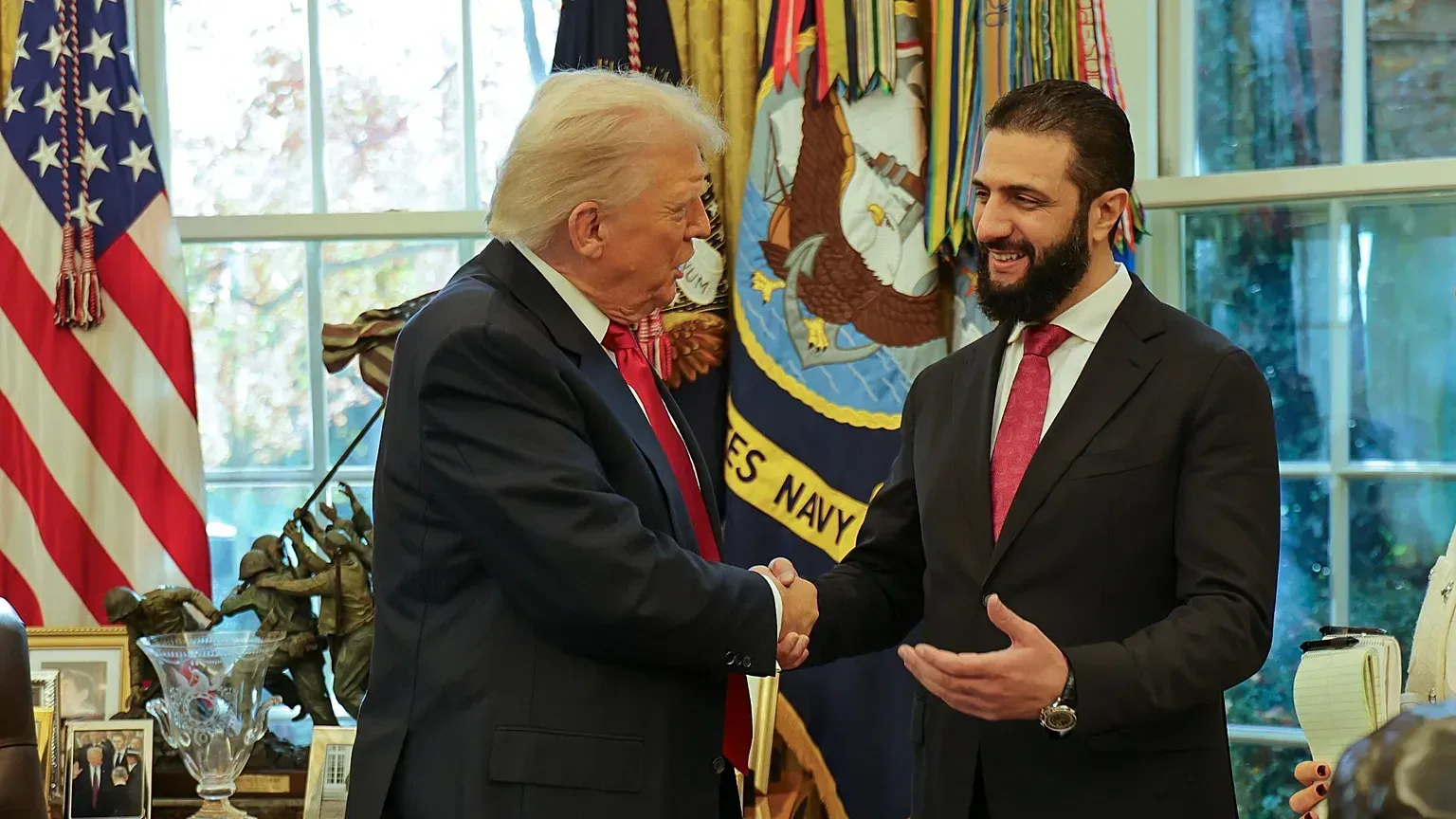
President Donald J. Trump Welcomes Syria’s Ahmad al-Sharaa to the White House